
Summary: The village has a bizarre custom wherein one night a year all laws are suspended and the people can go kill each other. Allegedly, this lets people get out their violent impulses and allows society to live free of crime and war the rest of the year. This doesn’t really work, because it turns out that career criminals still need to make money the other 364 days of the year, but the tradition lives on – it helps that a town this small and this far from the Grey River has only fleeting contact with organized crime to begin with, which lends credence to the beneficial effects of the tradition even though it’s not actually related. By happenstance, the day the characters come to town is Murder Night.
Month: February 2018
Pinhead Deserved Better Than He Got
Like two-thirds of my Vestitas encounters are some horror movie premise drafted into 40k, and generally speaking that works out pretty well. I feel like I failed Hellraiser, though, and that one hurts most of all, because pretty much alone amongst all the horror franchises I’ve drawn on, Hellraiser is the only one that’s consistently failed its own premise. There was a chance here to make an RPG encounter that lived up to the potential of Pinhead in a way that his actual movies never did. It’s a general rule of the first three Hellraiser movies that every scene with Pinhead is great and every scene without is mediocre at best (and the first movie suffers from having almost no Pinhead), and it seemed like it should be pretty easy to come up with a retelling of the first three movies in RPG format that uses Pinhead effectively.
URL Change
At this point, this blog’s original mission is clearly a failure, to the point where what few readers it has don’t even know what that mission was supposed to be. To the extent that it has survived, it has survived as my personal blog. As such, rather than paying to renew my original domain name, I’m instead paying for the (slightly cheaper, although it’s not super expensive either way) domain chamomilehasa.blog, which is consistent with my usernames across the internet (which also helps distinguish me from the not-insignificant number of people who use the same name online). I don’t think much of my audience uses the URL to access this blog anyway, and even if they do, I don’t have many readers to lose to begin with, but if anyone does get here by typing in the address, that address is going defunct in a couple of weeks, so probably best to get used to typing in chamomilehasa.blog instead.
The Puzzle Box
A lot of how good this encounter is going to be is going to come down to whether or not the GM is any good at playing Pinhead. Really, I’m not even sure how to give advice to that effect, beyond “watch Hellraiser II and III and do it like that. Ignore everything that isn’t Pinhead.”
Spec Ops: The Line Can’t Keep Doylist And Watsonian Actions Straight
We all know how Spec Ops: The Line works by now, because I’m like half a decade late to this conversation. Part of the reason I’m writing about it now is because MrBTongue recently released a video about it in which he presumed that a significant chunk of his audience would be unfamiliar with its plot, which seems weird to me even from the perspective of someone who just woke up from having been napping since November of 2016.
Spec Ops is clearly a criticism of genre conventions revolving around the portrayal of US military action in FPS games. It’s often described as additionally being a criticism of the player for continuing to do terrible things just because they can’t progress in the game otherwise. That first one is fair enough. Deconstructing genre conventions is usually interesting on its own (especially for genres whose conventions were established by mindlessly aping the style of one particularly successful work while most or all of its substance is lost in a game of telephone), and often makes the genre stronger by pushing later creators to respond with reconstructions that remove the weak spots exploited by the deconstruction in the first place.
The second one has always bugged the Hell out of me, because it only works when it happens to land in front of someone to whom its criticisms apply. Undertale is a judgmental game to the point where there is a specific hall of judgment where one of the characters judges your actions, but it bases that judgment on the player’s choices. It’s not always fully accurate, but it comes across as characters in the world making mostly fair judgments to the best of the information available to them, and uses a fourth wall breaking narrative so that it can judge a Doylist entity – the player – by their Watsonian actions, by making them part of the Watsonian narrative.
Continue reading “Spec Ops: The Line Can’t Keep Doylist And Watsonian Actions Straight”
Crimzon Clover
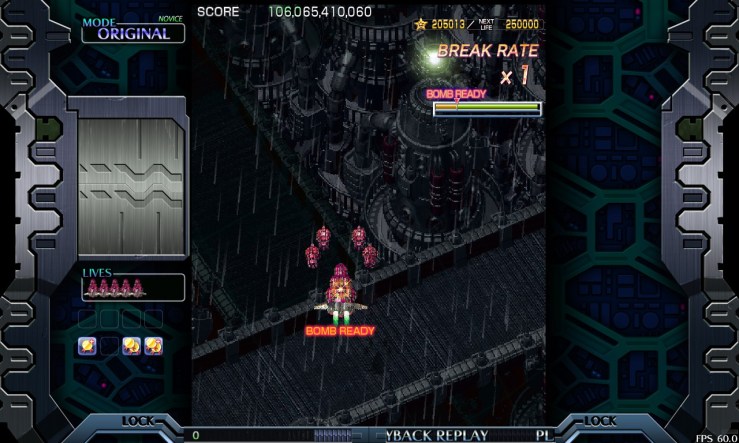
Crimzon Clover: World Ignition is a bullet Hell game I usually play while listening to podcasts. I can’t really get any work done while listening to podcasts, but CGP Grey’s Hello Internet and especially Cortex have been really helpful in sorting out my workflow and actually getting things done, so I listen to those as they release even when I’m otherwise really busy. This means that I only play the game for a couple of hours once every week or two, but I do still play it regularly. Now, Crimzon Clover is a very well designed bullet Hell game whose difficulty reaches up to extreme levels, so when I say that I’ve gotten pretty good at the game, bear in mind that what that means is that I can almost beat the game without continues on the lower (of two) difficulty. I’ve actually made it a rule not to play with continues on any difficulty setting, because the game is actually quite trivial if you do. You can just hold the attack button down and you will eventually overcome everything, because there is no limit to the number of continues. You’d be limited by quarters if you went to Japan and found this game in an arcade, but I got it on Steam as part of a Humble Bundle so I can, technically, beat the game on any difficulty by taping down the z-key and going out to lunch. That’s not sporting, though, so single continue playthrough it is.
Now, the game is a respectably difficult bullet Hell by the time you reach level two out of five. Even someone who’s reasonably good at bullet Hell games in general is probably not making it past level three or four on their first playthrough, or even their first couple playthroughs. There are lots of different enemy types with lots of different attack patterns and learning them takes time (although none of them are cheap insta-gibs and it is theoretically possible to beat the game on a blind playthrough, and I wouldn’t even be surprised if super hardcore bullet Hell players have managed it on the lower difficulty). What this means is that even after what Steam tells me is 38 hours play, I still hadn’t beaten the game.
So when I showed up to the start of the final level with five extra lives (that’s extras, so a total of six deaths before it’s game over), I thought I was in a pretty good place. I had gotten the final boss halfway dead with just one extra life before. If I could get to the final confrontation with two, I’d have a real chance of making this my victory run.
Aptonoths: Weirdly Non-Threatening
Monster Hunter World released lately, and I’m doing that thing I often do where I commiserate about not being able to afford the new thing by instead playing the old thing, specifically, Monster Hunter Tri. Monster Hunter, for those unaware, is a series where you hunt dinosaurs in order to wear their hides as a hit that will give you bonuses to hunting other monsters. Every game has the same plot: Go and hunt some monsters. Like, Tri does have some stuff about how there’s been some earthquakes near an island lately, and that’s caused some flooding, and also driven this giant leviathan up near the surface, and it’s pretty heavily implied that it’s left its deeper hunting grounds because something even bigger chased it out. Probably other Monster Hunter games have some kind of similar paper-thin plot, but they’re about as important as the framing story for a Mario game.
The aptonoth is a vaguely iguanadon-esque beasty that you encounter very early in the game. Here’s a gameplay shot so you can get a size comparison:
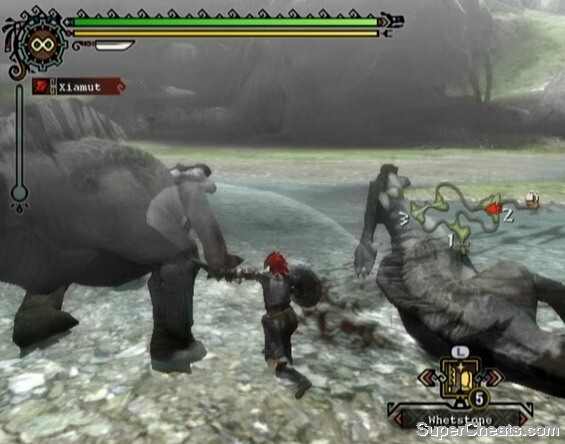
And here’s a more zoomed out shot so you can get a look at that thing’s tail:
Travelogue: Getting Answers
Dear brother,
This week, we’re finally starting to get some answers.
The Murder at the Mansion
Summary: The local mayor throws a small party. If the characters are at all well known, they are invited. During the party, the mayor is murdered, and there are a half-dozen potential suspects – word of this murder quickly gets out to the rest of the town, giving the characters reason to snoop around if they aren’t already. Characters will want to find the culprit to either bring them to justice or help them abscond.
Imbolc Update: Approaching the End of the Endless
It’s Imbolc. Celebrate the coming of spring by cleaning up the house and setting something on fire. Candles are traditional, but your neighbor’s car will also work.
Continue reading “Imbolc Update: Approaching the End of the Endless”
 Chamomile Has A Blog