
The Terrible Old Man
It was the design of Angelo Ricci and Joe Czanek and Manuel Silva to call on the Terrible Old Man.
They’ve got foreign names, though, so the safe bet is that these three are actually the villains and the Terrible Old Man is either misunderstood or else (more likely) brings well-deserved suffering on those who dare be Italian, Polish, and (according to Barnes and Noble) Portugese.
The inhabitants of Kingsport say and think many things about the Terrible Old Man
There’s more to this sentence, but what matters here is that Kingsport is now a thing. This shows up in a couple of other Lovecraft stories and also in Arkham Horror. Honestly, if you wanted to condense the Cthulhu Mythos down such that Kingsport and Arkham were the same town, that’d be defensible. They’re both New England towns and the only things that really distinguish Kingsport from Arkham are which specific stories and landmarks happen to be placed in one location or another. If you wanted to combine them, you could.
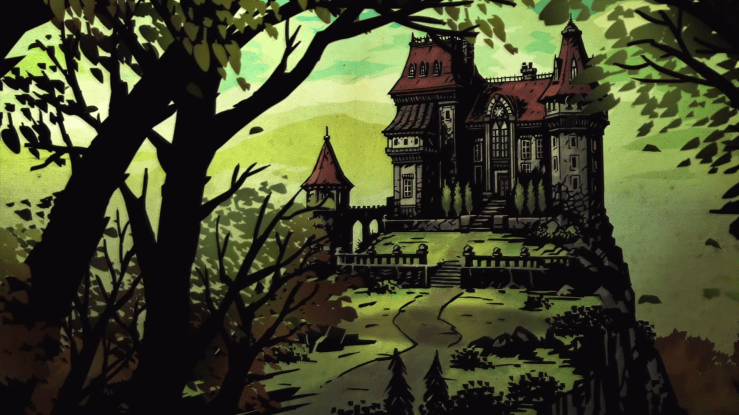
The Terrible Old Man, not otherwise named, is super creepy and weird. He lives in a creepy old house, he talks to bottles with little bits of lead suspended in them, and the lead moves, apparently in response. The people of Kingsport mostly leave him alone on account of how spooky he is, but our protagonists are immigrants, and therefore evil/stupid:
Those who have watched the tall, lean, Terrible Old Man in these peculiar conversations, do not watch him again. But Angelo Ricci and Joe Czanek and Manuel Silva were not of Kingsport blood; they were of that new and heterogeneous alien stock which lies outside the charmed circle of New England life and traditions, and they saw in the Terrible Old Man merely a tottering, almost helpless greybeard, who could not walk without the aid of his knotted cane, and whose thin, weak hands shook pitifully. They were really quite sorry in their way for the lonely, unpopular old fellow, whom everybody shunned, and at whom all the dogs barked singularly. But business is business, and to a robber whose soul is in his profession, there is a lure and a challenge about a very old and very feeble man who has no account at the bank, and who pays for his few necessities at the village store with Spanish gold and silver minted two centuries ago.
The plan is for two of the robbers to break into the house and torture the Terrible Old Man until he reveals the location of his hidden pirate treasure, whereupon the third robber will be waiting outside in the getaway car. Things do not go according to plan, in an ambiguous but spooky way:
Little things make considerable excitement in little towns, which is the reason that Kingsport people talked all that spring and summer about the three unidentifiable bodies, horribly slashed as with many cutlasses, and horribly mangled as by the tread of many cruel boot-heels, which the tide washed in. And some people even spoke of things as trivial as the deserted motor-car found in Ship Street, or certain especially inhuman cries, probably of a stray animal or migratory bird, heard in the night by wakeful citizens. But in this idle village gossip the Terrible Old Man took no interest at all. He was by nature reserved, and when one is aged and feeble one’s reserve is doubly strong. Besides, so ancient a sea-captain must have witnessed scores of things much more stirring in the far-off days of his unremembered youth.
Intriguingly spooky, but also possessed of strong undertones of racism. This story is pretty much Lovecraft in a nutshell, and it’s basically a replacement level Lovecraft story in terms of quality. If you picked a Lovecraft story at random, you’d probably get something about as good as this.
Continue reading “Mythos: The Terrible Old Man, The Tree, and the Cats of Ulthar”
 Chamomile Has A Blog