
Hey, remember when I dropped a few posts of setting building onto this blog, with the Miracose Order and the Order of the Magi and stuff? Of course you don’t, it was self-indulgent worldbuilding of dubious value even to my own GMing, let alone someone else’s. So anyone we’re going to do more of that now.
Author: Imperium Romanum
Storm Trooper Vs. Red Shirt
Today we ask the question: What happens when an insignificant force meets an insubstantial object? What happens when a soldier who can’t kill anything opens fire on a security guard who always dies?
The Big Cats
Summary: Freakishly large jungle cats prowl the hex, with absolutely no fear of humanity. They’ve grown larger off of a fountain of Chaos tainted water that springs naturally from the cave where they lair.
The Failure of Skill Challenges
I don’t like D&D 4e. The current narrative its apologists are building is that people only disliked 4e because it was sold under the D&D brand. The old narrative was that it got really good like eighteen books in if you just use MM3 stats, and I didn’t really care about that narrative, because no one reasonable is going to question my decision to stop giving 4e second chances after the first seventeen books. This new narrative, the idea that 4e is any good as a tactics game, is more troublesome, because if people believe it, they might actually think that 4e is a good model of how to design tactical gameplay. And dear God is that not the case.
I don’t really want to get into a whole rant about it myself because that would require digging up my 4e books to talk about it, and it’s been the better part of a decade and two or three moves since I last cracked one of them open. Plus, I can’t open those books without getting a little depressed, because they were part of the 3-4 years or so of my life when I lost the ability to get hyped about anything, and settled into that position so many modern consumers are in, where our ability to anticipate things caps out at cautious optimism, and that rarely. The book is made of broken promises and lies. I don’t really play Guild Wars 2 much at all for the same reason, even though it totally is one of the best MMOs on the market right now.
Anyways, since I can’t find my 4e books and don’t really want to bother anyway, I am instead reprinting the words of some other guy who examined why 4e skill challenges were a disaster. This might not seem like it’s much of an issue for the new “4e is a tactics game” narrative, but demonstrating that the team working on 4e were bad at accomplishing their goals absolutely helps build the plausibility of their tactical combat being just as bad. Talking about 4e’s skill challenges doesn’t provide direct evidence that 4e combat is bad, but the team being unable to get one system functioning properly should make you skeptical of claims that they did such an amazing job with another. The obvious follow-up here would be to actually examine combat, but I’m pretty sure the only people who care about 4e at this point are deluded fanboys, so I probably won’t bother unless someone else’s words fall into my lap and I can use it to avoid writing a blog post for a day.
Comments from our unwitting guest poster have all been italicized, but only because I couldn’t find a way to put them into Da Vinci Forward Regular font.
Rick and Morty Really Is That Good
So, there’s this thing in the Rick and Morty fandom where they talk about show creators Justin Roiland and Dan Harmond like they’re mavericks who discard basic storytelling just to troll their audience. If that sounds like it would result in terrible stories, you’re right. A show that runs on the principle of upsetting its viewers would be awful. Because obviously it would be, that is its goal.
Rick and Morty isn’t actually like that at all, though. It’s just that the fans are the kinds of people who produce this image:

So it shouldn’t be surprising that they’ll also try to build up the show’s creators as master trolls while lacking the knowledge of basic storytelling needed to realize that the narrative they’re building paints Justin Roiland and Dan Harmond as incompetent jackasses (which, by the way, they are not).
The Sanitarium
I thought this concept would lend itself towards a lot more conflict or exploitable resources when I first started writing it. As it is, it kind of straddles the line between an actual hex encounter and just a landmark. That’s fine, the hexcrawl can have somewhere in the neighborhood of 30 landmarks before the interesting encounters start to get too diluted, but I still wonder if there’s more potential in this idea I’m not realizing. The most fleshed out part of the encounter as it stands is Mycandra’s amateur hour diagnoses, and while that was fun to write, it’s not even an angle of infiltrating the sanitarium that I expect most parties to attempt, since it requires splitting the party.
Two Different Dystopias
There are two kinds of dystopia writing, the old kind that generally worked and the new kind that generally doesn’t. This is bad, because the new kind isn’t just a half-assed effort at what the old kind did well, it is in fact a new and different approach to writing dystopian fiction. It’s just that it’s also rubbish (the ones that get popular, anyway).
Rewatching Old Shows
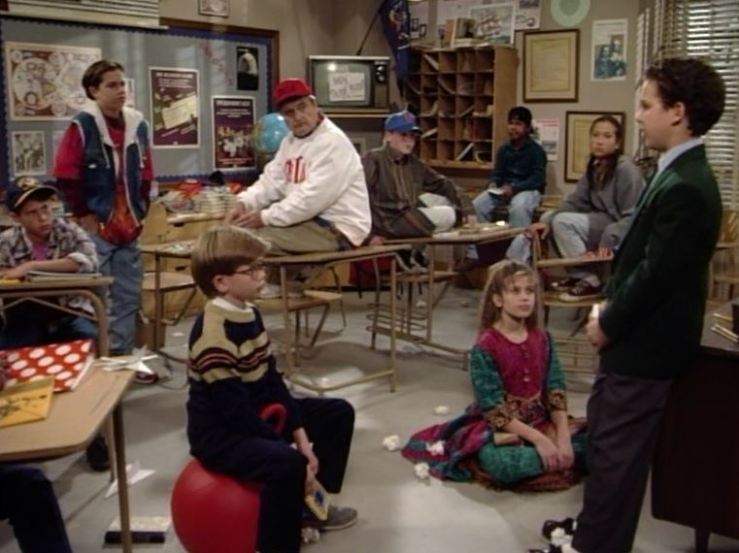
It turns out early seasons of Boy Meets World are extremely 90s.
Steam Library Roundup
I’ve committed to having one post every day this year and I don’t want to write another hex encounter today, so instead let’s pull some random games from the “Indie” category in my Steam library and give a brief review of them. I’m not going to promise in advance that all of the games in this category were correctly labeled. Quite a lot of them were sorted into here while sifting through a Humble Bundle trying to clean up my library.
Cave Story
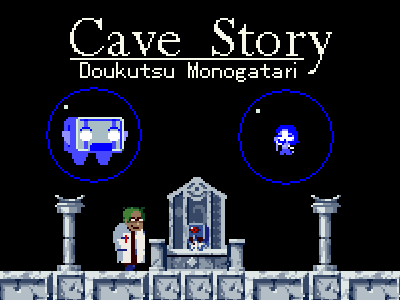
The original indie game internet sensation. This thing went nuts as freeware originally, back in the ages when indie games didn’t really have a market at all. Either you were putting your game on store shelves, you gave it away for free, or people had to fucking mail you dollar bills to pay for it. I still remember AdventureQuest warning people that they couldn’t guarantee that the money for a paid account wouldn’t necessarily reach them if mailed, but online purchasing infrastructure was pretty primitive at the time, so people did it anyway.
Cave Story, though. Fun game, but the nostalgia buttons it’s hitting aren’t from my childhood, so it doesn’t hit me as hard as others. It’s a sidescrolling shooter with good weapon and enemy variety and so far as I can tell they’ve got the late 80s/early 90s Japanese game tone nailed. Even if that reproduction was imperfect (I don’t really know enough of the source material to say for sure), I liked what they ended up with. It’s cute and endearing and makes me want to continue shooting slime monsters to save the weird rabbit-dog people.
Hoard of the Dragon Queen is Okay
I finished up running Hoard of the Dragon Queen about eight-ish months ago. I’m very much late to the “it was okay” party, but that’s sort of how I do, so let’s get rolling.
Hoard of the Dragon Queen has a very strong start and a pretty strong finish. The opening chapter is a raid on a farming town by the Dragon Cult, primary villains of the adventure path, including an actual goddamn adult blue dragon. The whole thing is a fighting retreat, trying to save people from the Cult and evacuate, rather than any hope of actually winning. This is a compelling intro that serves to make the antagonists threatening and intimidating without threatening to wipe the party.
It does, however, threaten to wipe the party on top of that. Level 1 characters will have a Hell of a time getting through all the content in Greenest. I think the idea might be that you’re supposed to skip some of it, but that seems like a waste. It’s not like I’m very likely to run this campaign again and need to reuse content. I’ve heard it advised that you can have characters come to Hoard of the Dragon Queen directly off of Lost Mines of Phandelver, and while level five is a bit much for Greenest in Flames, it would still probably go better than trying to run it as level one. Better to have your players feel like they’re more badass than any one thing the Dragon Cult has to throw at them except 1) for that dragon and 2) the Dragon Cult has lots of kobolds and action economy is a pretty decisive factor in 5e, as opposed to having them constantly dropping and getting back up and maybe some of them being killed outright at some point if they’re heroic enough to decide they don’t want to leave any of the villagers to their fate.
 Chamomile Has A Blog